
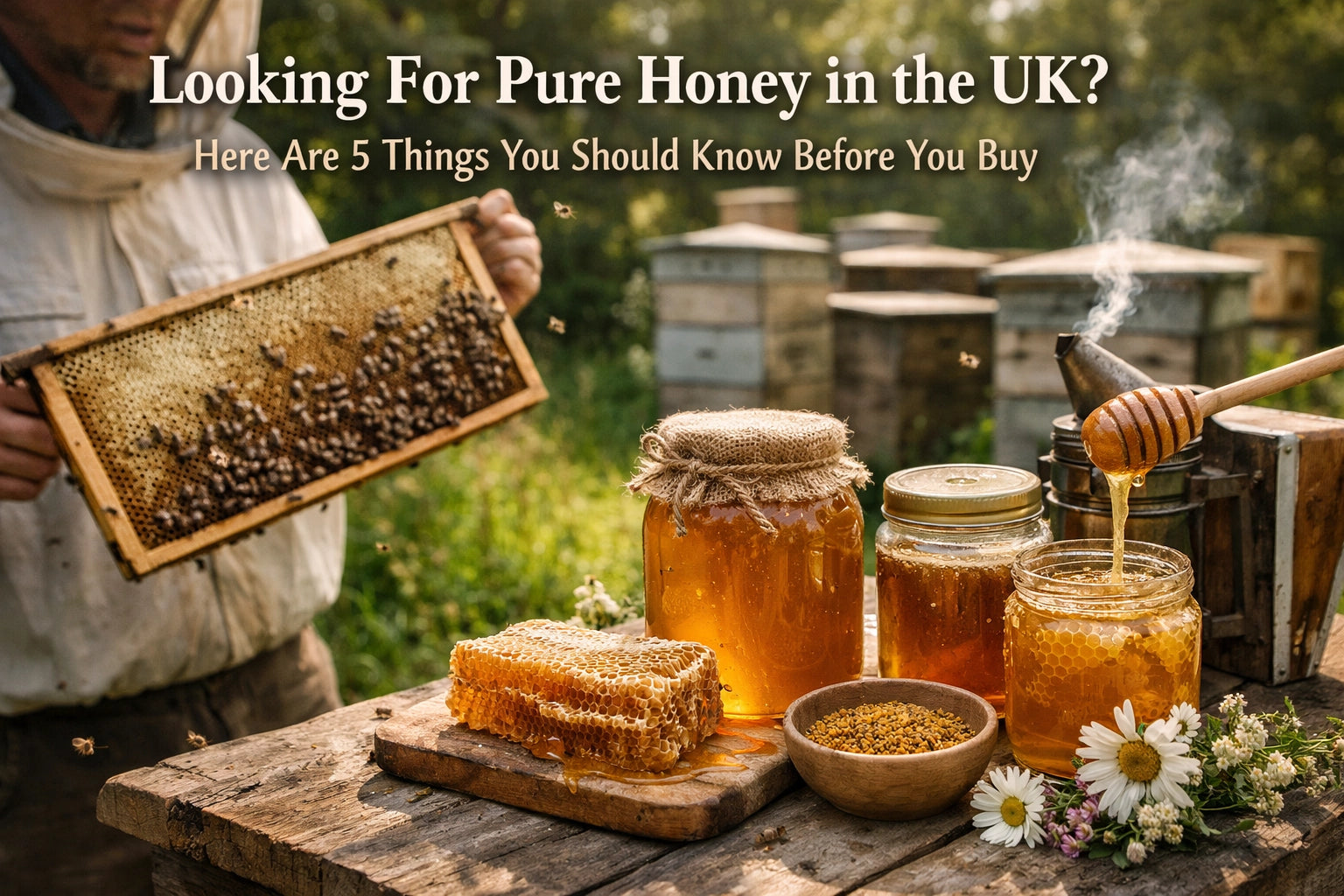
Looking For Pure Honey in the UK? Here Are 5 Things You Should Know Before You Buy
Walking down the honey aisle at your local supermarket can be overwhelming. Dozens of jars, all golden and promising, but which ones are actually pure honey? With the UK honey market flooded with everything from local raw honey to blended imports, knowing what you're really buying has never been more important.
We're Adam from Willow Park Honey, based in Essex, and we've been keeping bees in Halstead and Toppesfield for years. We've seen firsthand how confusing honey labels can be, even for people who genuinely want to support local beekeepers and buy quality honey. So let's cut through the marketing jargon and talk about what actually matters when you're shopping for pure honey in the UK.
1. Always Check Where Your Honey Actually Comes From
Here's something that surprises most people: that jar of honey on the supermarket shelf might not be from the UK at all. In fact, it's probably not.
Look at the label carefully. If you see phrases like "Blend of EU Honeys" or "Blend of EU and Non-EU Honeys," that honey could literally come from anywhere. China, India, Argentina – you name it. There's nothing inherently wrong with honey from other countries, but blended honey often means you're getting a generic product that's been mixed from multiple sources to keep costs down.

On the other hand, if a jar says "Product of UK" or lists a specific region like "Essex Honey" or "Scottish Heather Honey," you know exactly what you're getting. Single-origin honey tends to have more character and distinct flavours because it reflects the specific flowers and environment where those bees foraged.
At Willow Park Honey, all our honey comes from our hives in Halstead and Toppesfield in Essex. When you buy from us, you're getting honey from bees that forage in local hedgerows, wildflower meadows, and gardens. It's proper Essex honey through and through. Plus, you're supporting local beekeepers rather than faceless international supply chains.
2. Read the Ingredients List (Yes, Really)
This one should be straightforward, but you'd be amazed how many "honey" products contain things that aren't honey.
Pure honey has exactly one ingredient: honey. That's it. If you see anything else listed – added sugars, corn syrup, glucose syrup, artificial flavours, or preservatives – put that jar back on the shelf. What you're looking at isn't pure honey; it's a honey-flavoured product.
Some manufacturers dilute their honey with cheap sweeteners to increase their profit margins. It's a sneaky practice that's unfortunately more common than you'd think. The honey might look golden and pour nicely, but if it's been cut with corn syrup, you're not getting the real deal.
Genuine, pure honey needs nothing added. Bees have already done all the work, transforming flower nectar into this incredible natural sweetener. When beekeepers like us harvest honey, we simply extract it from the comb, strain out any bits of wax, and jar it up. No additives, no processing, no funny business.
3. If the Price Seems Too Good to Be True, It Probably Is
Let's talk about pricing for a minute because this is where a lot of people get caught out.
Producing quality honey isn't cheap. Beekeepers invest in equipment, spend countless hours maintaining hives, deal with disease and pests, and work hard to ensure their bees are healthy and happy. All of that gets reflected in the price.

If you're seeing honey at £2 for a 500g jar while everything else is £7-10, ask yourself why. Chances are, that cheap honey has been heavily processed, blended from multiple countries to reduce costs, or possibly even adulterated with sugars. It's the honey equivalent of that suspiciously cheap bottle of wine – you might save a few quid now, but you're not getting the real experience.
That doesn't mean you need to buy the most expensive honey on the shelf either. Compare prices per 100g across different brands and look for something in the middle range. Local raw honey from small producers will typically cost more than supermarket brands, but you're paying for quality, traceability, and supporting local agriculture.
Our award-winning honey (we won 3rd place in Essex at the UK National Honey Show) is priced fairly for the quality and care that goes into every jar. You can check out our full honey collection here.
4. Understand the Difference Between Raw and Pasteurized Honey
This is probably the most important distinction when buying honey, yet most people don't even know there's a difference.
Raw honey is honey in its most natural state. After extraction from the comb, it's simply strained to remove bits of wax and bee parts, then jarred. It hasn't been heated beyond natural hive temperatures, and it retains all its natural enzymes, pollen, antioxidants, and beneficial compounds. Raw honey will naturally crystallize over time – that's a sign it's genuine, not a defect.
Pasteurized honey has been heated to high temperatures (often around 70°C or higher) and sometimes filtered through fine mesh. This process gives it a longer shelf life, makes it look clearer, and prevents crystallization. However, heating destroys many of the beneficial compounds that make honey special in the first place.
Most supermarket honey is pasteurized because it looks prettier on the shelf and stays liquid longer. But if you're buying honey for its potential health benefits and natural properties, you want raw honey every time.
All of our honey at Willow Park is raw and unpasteurized. We believe honey should stay as close to how the bees made it as possible. If you want to learn more about why raw honey matters, we've written an entire post about the benefits of raw honey and why supermarket honey doesn't compare.
5. Look for Certifications and Provenance
When you're investing in quality honey, it's worth looking for some form of verification that what you're buying is legitimate.
For standard honey, there aren't loads of official certifications in the UK, but there are still markers of quality you can look for. Does the beekeeper provide information about where their hives are located? Do they have a website or social media presence where you can see their operation? Are they part of beekeeping associations?
Some producers hold certifications like organic status (though organic honey is quite rare in the UK due to the distances bees travel), or they might have B Corp certification indicating ethical business practices.
For specialty honeys like Manuka (which comes from New Zealand), look for MGO ratings that verify the honey's unique properties. For local UK honey, authenticity often comes down to transparency. Small-batch producers who are proud of their product will happily tell you exactly where it comes from and how it's made.

At Willow Park Honey, we're completely transparent about our beekeeping practices. We're based in Essex, our bees forage locally, and we handle everything from hive management to jarring ourselves. You can even read more about us and our Essex beekeeping operation on our website.
Why Pure Honey Matters
You might be wondering if all of this really matters. Can't you just grab any jar labeled "honey" and call it a day?
Well, you could. But you'd be missing out on what makes real honey special. Pure, raw, local honey is a connection to your local environment. It's a product made by bees working in your region's fields and gardens. It tastes different from blended imports because it reflects the unique character of where it was made.
Plus, when you buy from small local producers, you're supporting biodiversity and local agriculture. Beekeepers don't just produce honey – we help pollinate crops and maintain healthy bee populations, which benefits everyone.
The honey market has become complicated, with imports, blends, and adulterated products muddying the waters. But armed with these five tips, you can confidently pick out genuine pure honey that's worth your money.
Next time you're shopping for honey, take an extra minute to read that label. Check the origin, scan the ingredients, consider the price, look for "raw" or "unpasteurized," and see what certifications or information the producer provides. Your taste buds (and local beekeepers) will thank you.
If you're looking for proper raw honey from Essex, we'd love for you to try ours. Every jar of Willow Park Honey is pure, raw, and made by our bees in Halstead and Toppesfield. No blends, no additives, no processing – just honest honey the way nature intended.